AR Games Projects

The STEP lab has been developing and researching Augmented Reality games since 2003. These games include ones that are designed to take place outdoors over large spaces and others that take place indoors using wireless networks.

Outdoor

Indoor


Outdoor

LIONS Project

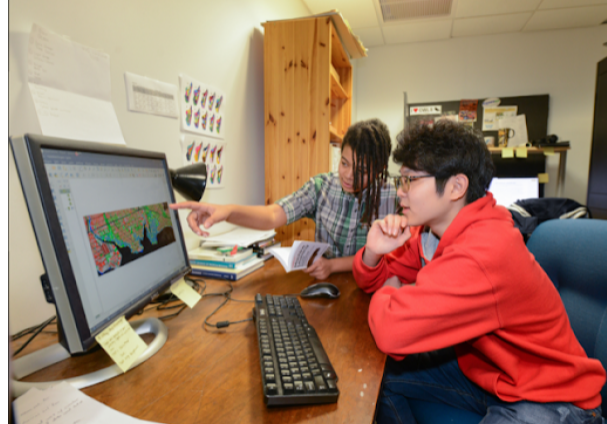
This project engages middle school students in playing and authoring AR games as part of an after-school and summer enrichent program. In partnership with the Missouri Botanical Garden, our goals are to explore the benefits and limitations of utilizing AR games and AR game design software to help St. Louis area youth develop STEM skills and positive attitudes about science and technology. The AR curriculum is one part of the larger LIONS project (Local Investigations of Natural Science) funded by an NFS-AYS grant.


Zoo Scene Investigators

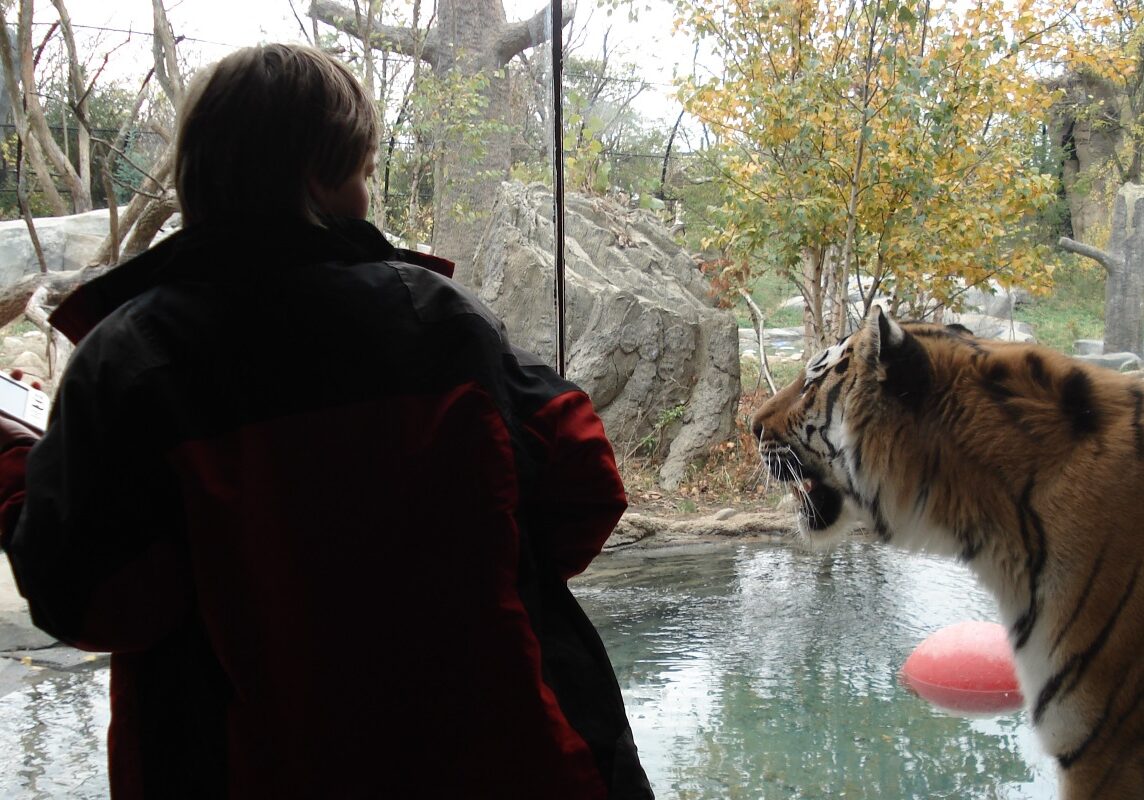
The Columbus Zoo and Aquarium, Dublin, OH, partnered with the STEP lab to create a new AR game for its middle school (grades 5-8) field trip visitors. In this game, Zoo Scene Investigators, a zoo security guard has tackled a mysterious nighttime intruder. Players use their mobile devices to search the zoo grounds looking for clues which could link the intruder with the illegal wildlife trade. Research questions focus on the use of mobile devices to provide interactive narraive augmenting existing live animal exhibits.


Timelab

TimeLab, starts with a video that sets the players 100 years in the future when global climate change has wreaked havoc on Cambridge. They are then sent back in time to present day to study ballot initiatives that could potentially remediate the effects of global climate change in the future. Players walk around the MIT campus and surrounding areas collecting information (real and virtual) on methods of reducing climate change and the impact of climate change on Cambridge. For example, at one point they look across the Charles River to the Hancock Tower that currently uses a beacon to provide information about the weather, and consider whether a more comprehensive weather warning system could be of use to warn future area residents of frequent severe weather. As players stand on Memorial Drive near the MIT campus, they consider how 100 years in the future that location is often under water from floods, and think about ways that those floods could be prevented. In the end, the players choose a number of ballot initiatives that they must debate, and through some simple game mechanics ultimately find out whether those measures are approved and what impact they have.

Timelab (sponsored by The Center for Future Civic Media) has been played with a number of groups including parents and kids and the Cambridge Science Festival, adults as part of The Center for Future Civic Media, and MIT students as part of a class. The most recent implementation was this past Wednesday when a class of 20 middle school students from Gloucester came to MIT as part of a summer camp. Over the course of three hours the students explored the campus, learned about the potential impacts of climate change on Cambridge, and debated how to mitigate these impacts. The students were very enthusiastic in their response to the game, as they enjoyed exploring the campus, playing a game and learning. The teachers also enjoyed the game and cited the unique ability to engage students in problems of both scientific and social/political impact as a critical and positive attribute of the game.


AR Simulation Games for Math and Literacy Learning with Emerging Mobile Technologies

Augmented Realtiy Games on Handhelds (ARGH) is a three-year research project (“Augmented Reality Simulation Games for Mathematics and Literacy Learning with Emerging Mobile Technologies”) funded by the U.S. Department of Education’s Star Schools Program. In partnership with the University of Wisconsin-Madison and the Harvard Graduate School of Education, through this grant we are developing AR software (a game engine and editor), as well as several AR games, corresponding curriculum, and support materials for classroom use.


Mystery @ MIT

In Mystery @ MIT, a large Boston-based hgh-profile event is looming on the horizon. A surge is mysterious illnesses have event organizers asking whether or not we are on the verge of a large-scale disease outbreak. Players in this AR game investigate and gather data to make their recommendation to event organizer about whether or not to cancel the event. Diseases investigated include West Nile Virus, SARS and the flu.


Charles River City

Charles River City, loosely based on Chris Dede's MUVE "River City", is MIT's second generation outdoor GPS-based Augmented Reality game. While the game itself introduces some key new game play and learning elements, it is also built on a dynamic engine that will allow others to build similar games using an authoring tool that should be released in the coming months.

The basic scenario for Charles River City is that there has been an outbreak of illness coinciding with a major event in the Boston Metro Area. The event changes for each run of the game, so that it is based on something timely. One of the first runs started out like this:

  • The July 1st, 2004 headline of the Boston Globe reads “26 More Fall to Mysterious Illness as DNC Looms”. A rash of disease has swept through Boston; and—with the Democratic National Convention coming to the city in a few weeks—citizens, politicians and health officials are all concerned. What is the source of the illness? Is this an act of bioterrorism or a naturally occurring event?

Players are then told that a team of 20 experts is brought in to investigate the problem, including epidemiologists, physicians, public health experts, laboratory scientists, biologists, computer scientists, and environmental specialists. This group must work together first to evaluate case reports and available surveillance data, then to plan and implement rapidly an investigation to determine the cause and source of the outbreak, assess risk, communicate with the professional and public communities and identify effective interventions. The team will compile information through collection and analysis of environmental samples, hospital records, patient histories, clinical samples, and testimony from community members, then engage in collaborative analysis and interpretation. The team must determine its findings and propose actions very quickly in order to assess the risk, propose timely means to reduce risk and treat affected persons, diminish societal fears, and work with decision makers to design and implement a solution to the problem.

While much of the game play is similar to Environmental Detectives (and in fact all of the capabilities of the Environmental Detectives game is also built into the newer engine) including location sensing, interviewing, and data collection, the new game offers several features that make it a more interesting and dynamic environment. These features include:

  • Time dependence
    – The game can now change over time. Non-player characters (NPCs) can change what they say, appear or disappear, and change location based on the time in the game. Similarly, samples can change over time representing the dissipation of a chemical, or some biological change.
  • Distinct player roles
    – Players take on one of several distinct roles in the game. These roles provide the players with special capabilities (e.g. being able to take certain kinds of samples, or receive unique information). The role also dictates what information players get from the NPCs (e.g. someone might say one thing to a police officer and something entirely different to the medical doctor).
  • Individual medical symptoms
    – Individuals in the game can present with medical symptoms that are accessible by some range of the real players. These can also change over time to represent the progression or spread of a disease.
  • Increased role of data beaming
    –Players can beam data that they collect to other players within the game. This information might be interviews that they have collected from disparate places or differing roles, or it may be field data that they have collected.
  • Cascading events
    – Events can cause the triggering of other events. For example, speaking to one NPC might cause another NPC to appear somewhere else on the map (i.e. an NPC tells you about someone else with who you should speak). The triggering event may be something that a player experiences directly or come from information beamed to them by another player.
  • Greater stability and usability – Improved GPS readings, application stability and organization of information make the game more flexible and useful


Environmental Detectives

Environmental Detectives was the first AR game created by the MIT TEP. It was targeted at high school and university students. In this game students play the role of environmental engineers who are presented with the following scenario at the beginning of the simulation:

  • During the construction of the underground garage of the new Stata Center (a big and controversial construction project) significant amounts of water are pumped up from the ground in order to lower the groundwater table so that the garage can be constructed in a dry environment. As a matter of regulation the water is tested for the 25 most commonly found chemicals in groundwater at hazardous waste sites. As a result of the testing it is discovered that a toxin is present in the extracted water. You call the President of the University to report and he asks, “How dangerous is this toxin? Where did the contamination come from and how widespread is it? Does MIT need to take some action (and what action might this be)? What do you advise?” You promise to call him back within three hours with your advice on the problem.

Students watch a 60 second digital video-briefing from the University president where they are enlisted to investigate the spill of the toxin, a carcinogenic degreasing agent which is commonly found in machine shops, cafeterias, and hospitals. The goal of the game is to locate the source of the spill, identify the responsible party, design a remediation
plan, and brief the president of the University on any health and legal risks so that he will be prepared for a meeting with the EPA – all within two hours. At the end of the game, students make a five minute presentation to their peers outlining their theory behind the spill.


The spread of the toxin is simulated on a location-aware Pocket PC, which functions as a tool which students can use to investigate the toxic spill. Each Pocket PC is equipped with a GPS device, which allows players to sample chemical concentrations in the groundwater depending on their location. Players are given three reusable drilling apparatuses which they can use to drill for water samples. After drilling for a sample, players must wait three minutes for the sample to return, meaning that students can only take three samples at a time, and are forced to develop sampling strategies in order to optimize the amount of ground that they can cover in limited time. Because the GPS data is only accurate within 10 meters, there is some built-in error to the collected readings as well.

Environmental Detectives contains a multimedia database of resources which students can use to learn more about the chemical, where it is found on campus, the health risks associated with exposure to the toxin, how it flows through ground water, relevant EPA regulations, remediation strategies for cleaning up the toxin, and the political and economic consequences of EPA violations on campus. Students access these resources by obtaining interviews from virtual university faculty and staff who we have spread across campus at locations roughly corresponding with actual operations. Because time is limited and there is not enough time to interview everyone or to drill more than a handful of wells, students must make choices between collecting interviews, gathering background information, and drilling wells, adjusting and reprioritizing goals as new information becomes available.


Indoor

POSIT

The POSIT game combines features of the indoor AR game and Discussion (Participatory Simulation) game to support scenarios around current controversies in science and technology. Players move between locations gathering information from virtual characters on a single controversial policy question. Each player is assigned a character to role-play, with a back story suggesting some stake in the controversy. They express a numerical opinion rating based on their character, and update it as they discover evidence and share it with each other. They can view a histogram showing every player’s opinion at that time. Players attempt to persuade each other toward their own viewpoint, with the goal of swaying a vote at the end of the game on the policy question using the data and information that they collect throughout the space.

The “Biosafety / Biohazard” POSIT scenario asks players to consider a (fictional) controversy around whether MIT should construct a biohazard level-4 laboratory. Players might for example role-play a biotech researcher, student activist, university official, or EMT. The players move around the MIT campus gathering evidence from virtual characters such as biology professors, city council officials, local citizens, and construction consultants. From these characters the player might for example learn scientific details about a virus to be studied at the proposed lab, a history of accidents at biohazard facilities, and the academic and business benefits the lab might bring. The virtual characters move around and reveal new information at different times, and respond differentially to players depending on their roles. The players can also collect data from the virtual environment such as samples from the air. In a meeting at the end of the game, the players engage in a debate and then vote on whether the lab should be built, with a facilitator playing the role of city mayor. Finally, the facilitator leads a meta-game discussion in which players are asked to reflect on how and why their opinions changed during the game. This discussion is supported by visualizations of each player’s opinion changing over time during the game, and the distribution of opinions in the whole group over time.


Outbreak @ MIT

Outbreak @ MIT (O@MIT), our newest indoor Augmented Reality (AR) game, represents a major milestone in the development of our AR games for learning development. O@MIT is the first client-server based that we have deployed. While this may seem like a small technical improvement, it allows for substantial changes in the way games are designed, constructed and played.

Like the other MIT AR games, Players in O@MIT are equipped with handheld Pocket PCs as their link between the real world and the virtual world of the game. The Pocket PCs are receiving location information based on simple Wi-Fi (wireless networking) positioning. Being in ubiquitous network coverage also allows the Pocket PCs in the game to stay connected to a server. Unlike the other games we have created to date, this allows all of the players in the game to live in one common world where the actions of one player have immediate (and delayed) effects on all of the other players. For example, a player might pick up a virtual item in a room, which would then not be accessible to any of the other players. Similarly, a player might contaminate a scene, move important items, or interact with an NPC in ways that have consequences for other players. This fundamental change in the game engine has opened up new opportunities of game play and learning exploration.

In this specific game, players are brought in to investigate a potential epidemic on campus. The story goes that several people on campus had been on a flight from Chicago on which one passenger has been diagnosed with a suspected case of SARS. A team of experts is brought in to assess the situation on campus and get it under control. Again, the client-server architecture of the game allows for additional elements, not previously available through our AR games. Rather than assessing the situation and recommending solutions, as we have done in Environmental Detectives and Charles River City outdoors, players must now actually contain the problem. Among the actions that they can take are:

  • Take and analyze samples from real and virtual players in the game to test for the presence of diseases.
  • Obtain and provide medicines to real and virtual players in the game to control the spread of the disease.
  • Use preventative gear (e.g. masks and gloves) to control the spread of the disease.
  • Quarantine individuals to control who characters come in to contact with.

The game engine shares some common features with previous games, like the ability to take interviews and samples, but also adds virtual limited objects that have specific purposes. Perhaps most importantly, it adds a hidden layer through which the server can determine how the disease is spreading amongst the real and virtual players within the game.
Using some simple disease modeling, the spread of the disease can be modeled based on the actions and whereabouts of the players involved in the game. This means that they must do their best to prevent the spread of the disease and assess their own progress and status.

In initial runs of the game with both educators and public health experts, the dynamics and principles of the game have proven to be intriguing and promising. We intend to extend this platform in later projects.


Mystery @ The Museum

Mystery at the Museum is the first indoor Augmented Reality simulation created by the MIT Teacher Education Program. In this game, teams consisting of a Biologist, a Technologist and a Detective must work together to solve a crime. The infamous band of Flamingo Thieves has struck again and stole a priceless object from the Museum of Science, but players must figure out what they have stolen, how they did it, and catch the thieves before they get away.

Players have many different ways in which they can collect clues - including interviewing virtual characters (unique to each room within the museum), collecting clues found in exhibit halls, analyzing samples using virtual instruments, and using understanding information from exhibits throughout the museum.

Players receive information based on their location (provided via Wi-Fi) and can interact with each other and virtual objects via Infrared data exchange. The experience creates a real-time adventure in which players must race against time and the virtual thieves to collect the information necessary to apprehend the thieves, locate what they have stolen, and catch them before they get a chance to leave.