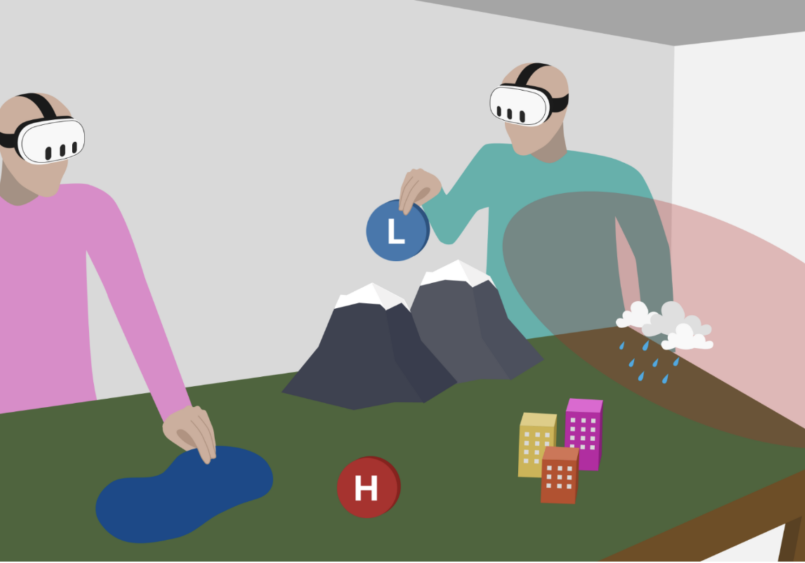
We’re in this Together (WIT) leverages headset-based mixed reality to create co-located, collaborative participatory simulations (p-sims) for exploring complex phenomena in science. The platform can synchronize up to 10 players using Meta Quest mixed reality headsets (3, 3S, or Pro), anchoring a virtual p-sim in a shared physical space such as a classroom.
Simulation and Computing Tools
Our research builds on the work of Seymour Papert and other MIT researchers who pioneered visual programming languages and the theory of constructionism in education. We’ve developed tools and platforms for teaching complex systems and computational thinking, as well as providing an easier entry in computer science—all based on the power of learning from creating a program and seeing the result. Using our programming platforms, students can generate models of real-world systems, make games to better understand their environment, and create working apps for mobile devices.
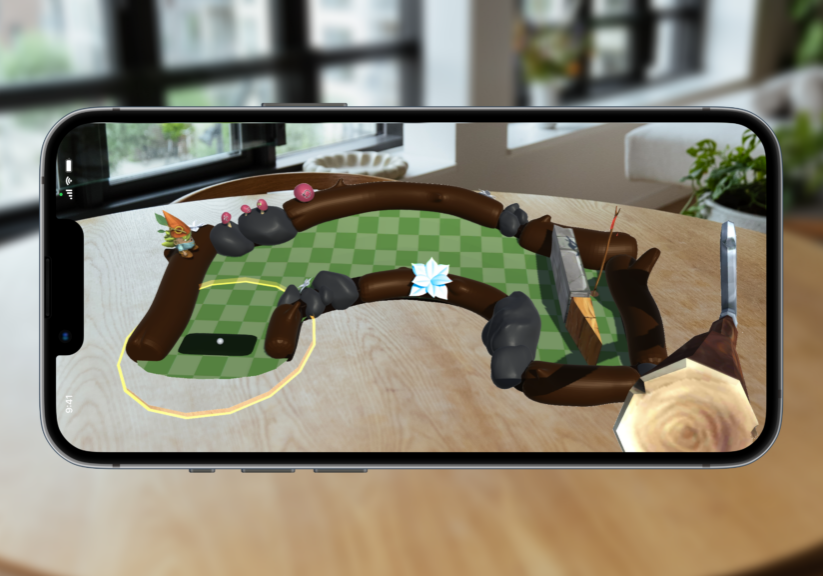
Gnome Gnolf
Gnome Gnolf is a mobile augmented reality puzzle game, designed as a playful introduction to spatial geometry transformations for middle and high school students. The game is played by holding up a smartphone to view 3D game levels, which are anchored in real space using AR technology.

StarLogo Nova
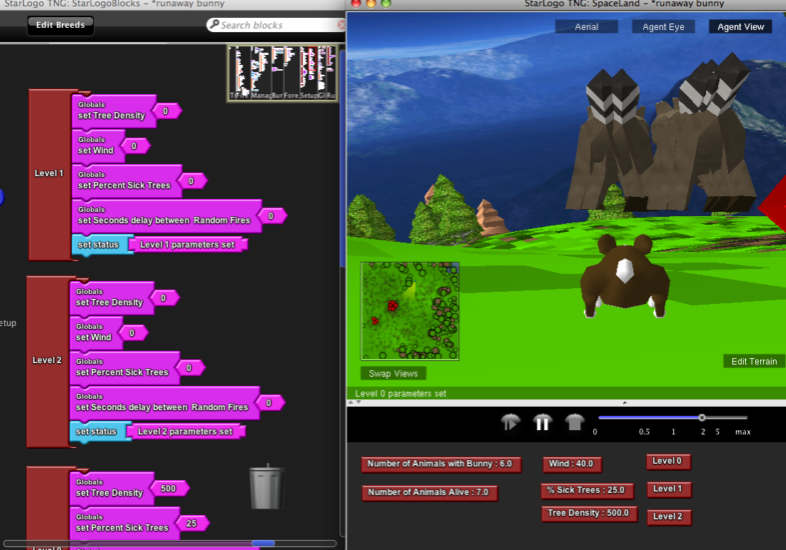
StarLogo Nova is a programming environment that lets students and teachers create 3D games and simulations for understanding complex systems.
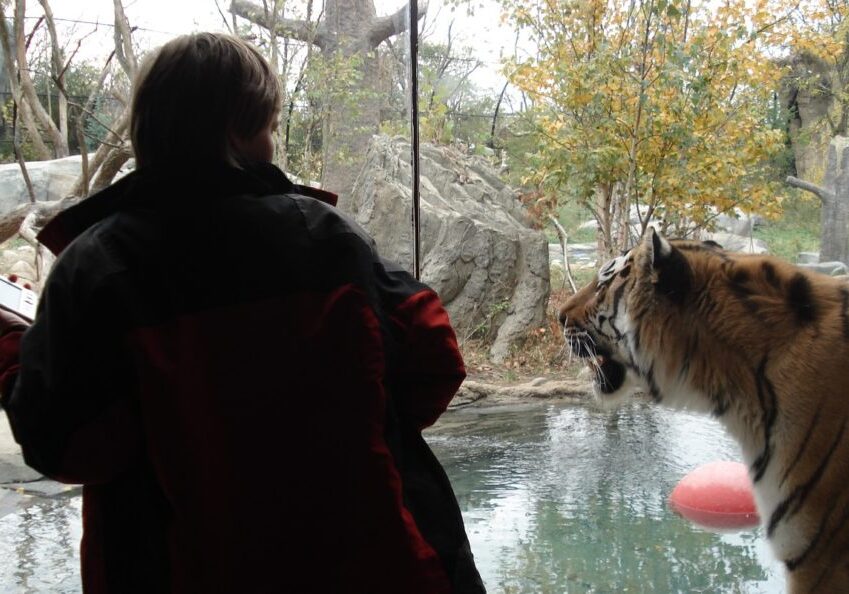
Taleblazer
TaleBlazer is a blocks-based software environment for creating and playing location-based augmented reality (AR) games.